



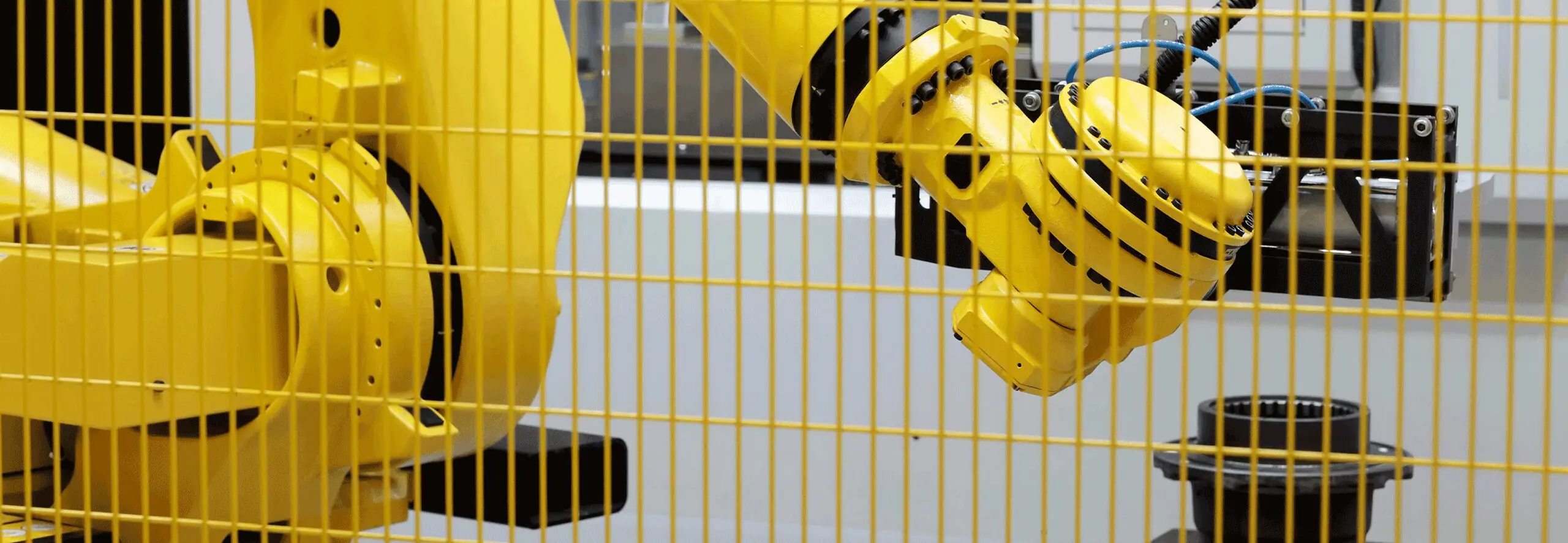
Safety distances are a key element in the design of industrial perimeter guarding. Correctly positioning guards in relation to machinery helps prevent contact between operators and moving parts and reduces the risk of accidents. The EN ISO 13857 standard defines the safety distances required to prevent hazard zones from being reached: the values to apply depend on a number of factors, so the entire configuration, the characteristics of the installation and the applicable regulatory requirements must all be assessed.
Regulatory framework
EN ISO 13857:2019 (Safety of machinery – Safety distances to prevent hazard zones being reached by upper and lower limbs) is a technical standard that sets out the values to be used as distances to be maintained in industrial settings so that a person cannot reach a hazard zone through an opening or over a protective structure.
The standard works alongside other key references for machinery safety:
- EN ISO 12100, which covers risk assessment and risk reduction at the machine design stage;
- EN ISO 14120, which sets out the general requirements for the design and construction of fixed and movable guards;
- EN ISO 13854, which specifies the minimum gaps to avoid crushing of parts of the human body.
The safety distance is not a universal value that can be applied to all machinery: the values must be selected according to the conditions set out in the standard and the results of the risk assessment.
Minimum safety distances from machinery: factors to consider
Determining safety distances requires an overall assessment of the guard and of the hazard behind it. EN ISO 13857 takes into account the different ways in which an operator could reach a hazard zone.
Reaching over the guard
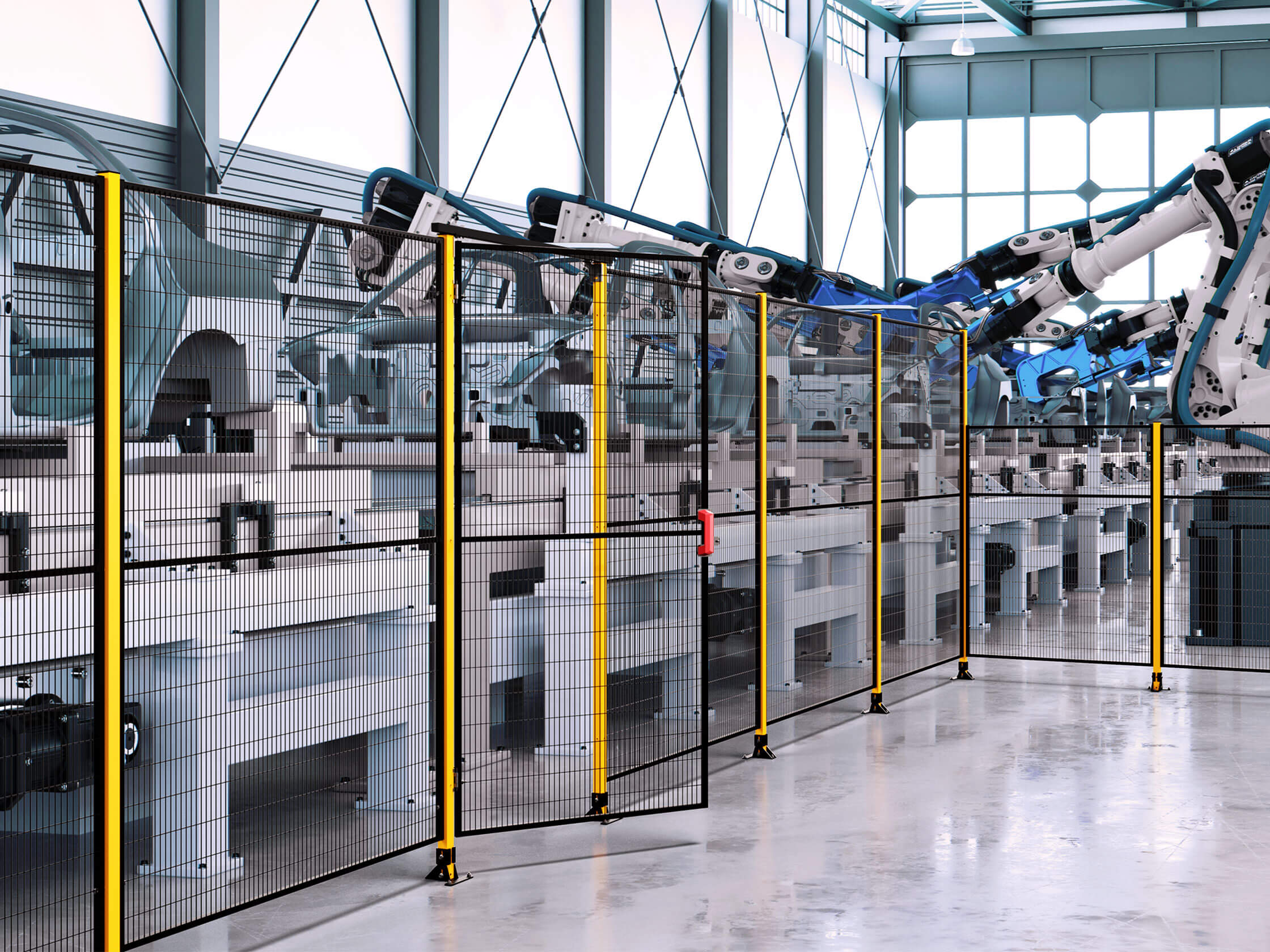
A fence that is too low or incorrectly positioned can allow hazardous parts to be reached without physically passing through the barrier. In this case, the perimeter guarding layout must be designed by taking into account, in combination, the horizontal distance from the hazard, the height of the guard and the height of the hazard zone.
Examples: fencing for robotic cells, automated assembly islands, production lines.
Reaching through regular openings
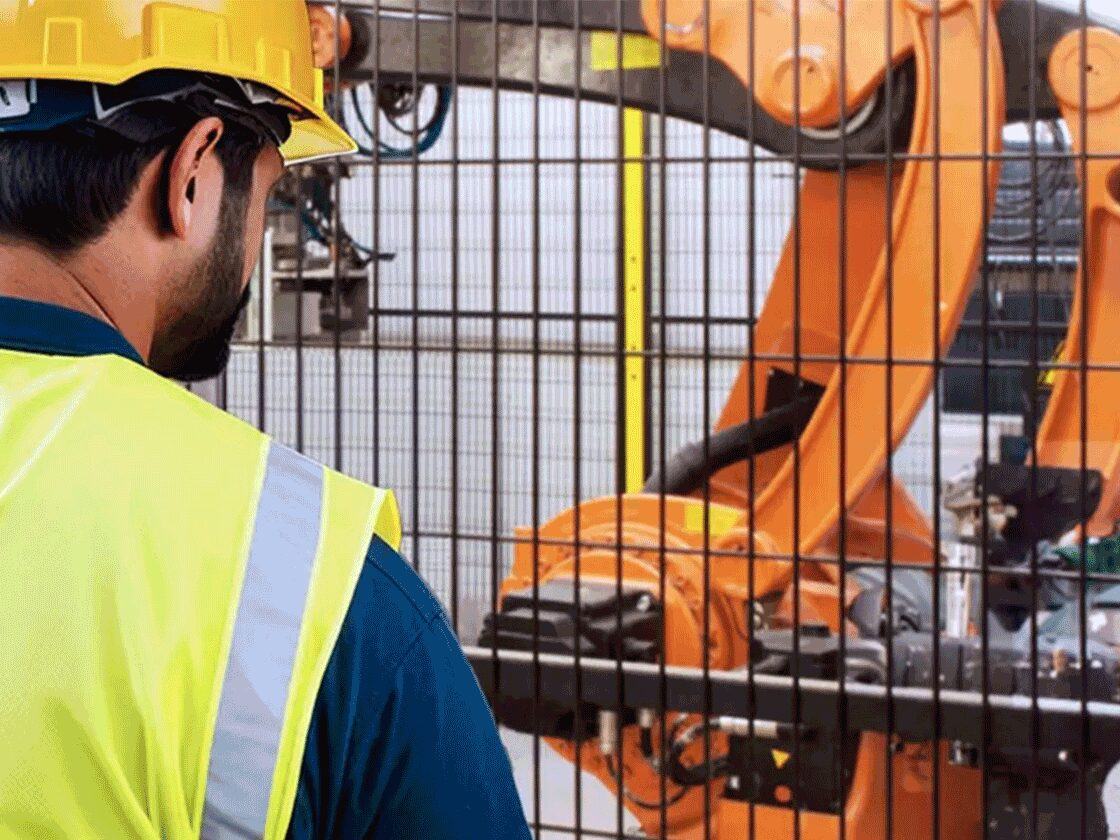
Depending on the shape and size of their mesh, the openings in industrial guard panels determine the minimum distance required to prevent fingers, hands or arms from reaching the hazard zone. EN ISO 13857 distinguishes between slot, square and round openings, whose reference dimensions are, respectively, the width, the side length and the diameter of the opening.
Examples: machines with manual loading or unloading, installations requiring ventilation, robotic islands and palletisers.
Reaching with the lower limbs
To prevent hazard zones from being reached with legs and feet, the standard specifies criteria that apply when the risk assessment shows that the same hazard zone cannot reasonably be reached with the upper limbs. Here too, the size of the openings and the configuration of the guard are decisive factors.
Examples: handling lines and conveyor belts, foot-operated machines, waste compactors.
Safety distances and perimeter guarding: how to proceed
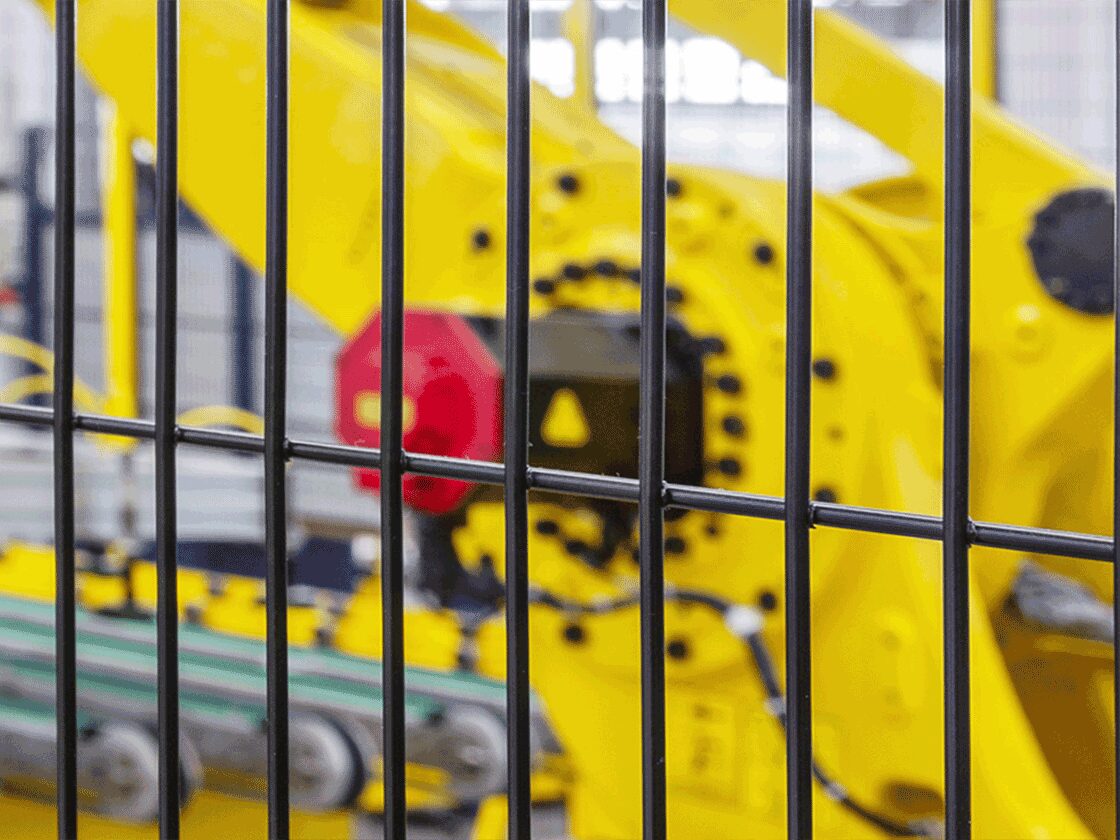
Applying EN ISO 13857 requires an approach based on risk assessment and on the actual characteristics of the installation. A sound process can be structured in four steps:
- Identify the hazard zones by pinpointing the parts of the machine that may pose a risk to the operator, such as moving parts, industrial robots, tools, automated handling systems and access points to the installation;
- Define how the hazard can be reached, i.e. the way in which a person could reach the hazard zone (over the guard, through the mesh openings, from below). Each scenario requires a specific check;
- Determine the applicable safety distance on the basis of the relevant criteria and values set out in EN ISO 13857, taking into account reference body dimensions, guard height, the position of the hazard and the geometry of the openings;
- Check the industrial guard as a whole, including all possible access routes such as doors, material passages, joints, lower openings and connection points with other structures.
The regulatory framework completes this assessment with the requirements for the design and construction of industrial guards, which are covered by EN ISO 14120.

What we can do for you: safety distances in Satech perimeter guarding
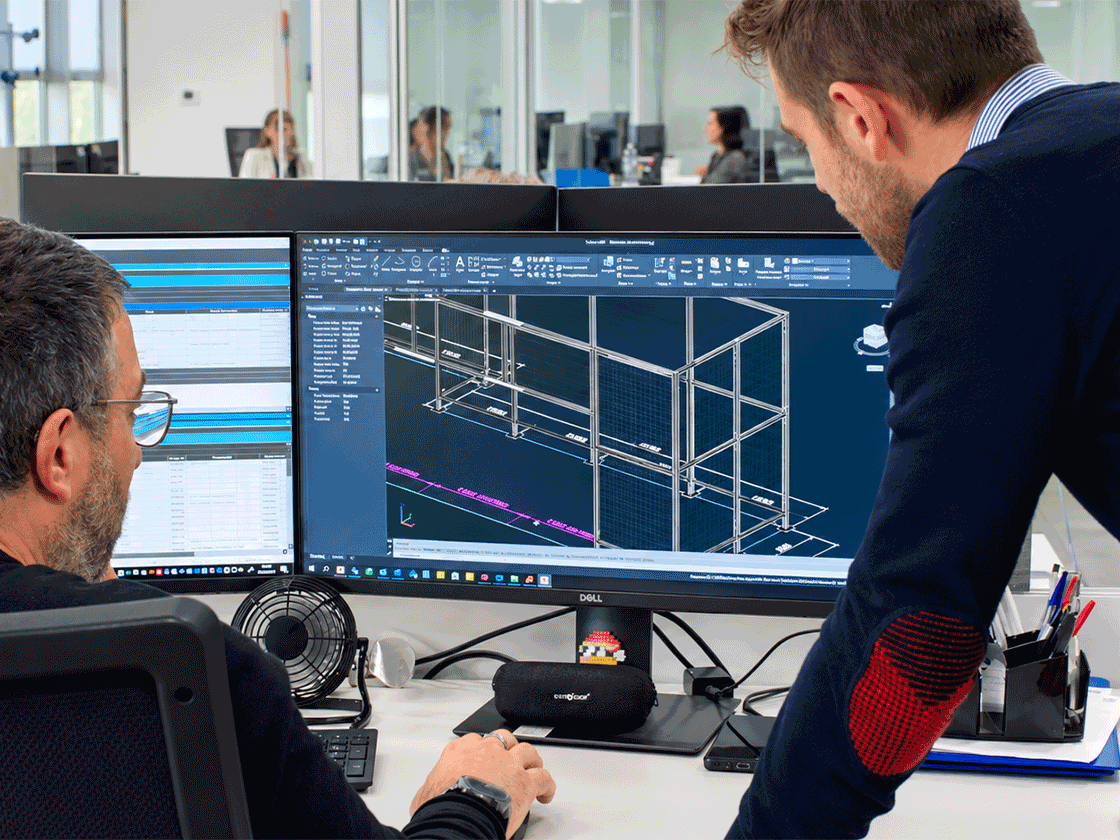
Satech modular solutions offer a choice of framed and frameless systems to suit operational needs, machine characteristics and the space available, prioritising strength, speed of assembly or configuration flexibility depending on the application.
The choice of systems and individual components within the Satech range must always start from the machine requirements and the risk assessment. The minimum distance is one of the design parameters, together with the guard layout, access management and operating conditions.
Find out more about safety distances for Satech perimeter guarding
EN ISO 13857 – Frequently asked questions
What is the minimum safety distance between a machine and perimeter guarding?
There is no single minimum distance that applies to all machines. The value depends on factors such as the height of the hazard zone, the height of the guard, the size and shape of the openings, and the way in which the hazard can be reached. The distance must always be determined with reference to EN ISO 13857 and to the specific risk assessment.
How are safety distances for perimeter mesh fencing calculated?
You need to identify how the hazard zone can be reached and determine the relevant parameters, including opening size, guard height and position of the perimeter. The values are taken from the applicable criteria of EN ISO 13857 and must be checked against the actual configuration of the installation.
Does the safety distance have to be the same along the entire perimeter of the machine?
Not necessarily. The distance may vary depending on the presence and position of the hazard zones, the height of the guard and the ways in which a person could reach each area. Each section of the perimeter must be assessed taking into account its specific accessibility conditions. For this reason, when designing industrial fencing, it is important to check the entire configuration, not just the distance between a single panel and the machine.
How can the footprint of perimeter guarding be reduced without compromising safety distances?
The choice of a specific infill (mesh, sheet metal, polycarbonate, etc.), the height of the guard and its position relative to the hazard zone can significantly affect the footprint of the perimeter. The starting point is to identify the applicable distances under EN ISO 13857 and compare the configurations that meet the project requirements. Satech modular solutions make it possible to create different guarding configurations according to the space available and the characteristics of the application. The final choice must always take into account the actual installation conditions and the risk assessment.
